$20 Game Studio: Ethical Disney Solitaire with AI & Godot
I got tired of games like Disney Solitaire rigging the deck to force me to buy coins. I spent about 20 days playing, in hopes of making some money on the Freecash app, but realized the game wasn't actually a solitaire variant—it was a monetization trap.
I’m fighting back. I’m building a 2.5D Disney Solitaire, TriPeaks variant in Godot 4.6 using Claude AI as my lead developer. I am recording every second of the process: every prompt, every terminal error, and every strategic "memory dump" used to bypass AI rate limits.
The Mission: Proving that a single "Architect" with no manual coding can build a 500-level, fair-play mobile game that rivals big-budget studios.
The Project Log (The 72-Hour Technical Drama)
Day 1: The Constitution & The Friction
- The Goal: Build the foundation. After a long conversation with ChatGPT, we build a detailed table of the gameplay mechanics of Disney Solitaire, what frustrated me as a paying player, and how I wanted to create a profitable variant that actually allowed players to win. We established the
claude.mdfile to set the rules. - The Reality: It wasn't magic. I fought Claude over inferred variable types and a major runtime vs. editor"conflict. Claude kept trying to generate elements at runtime, while I demanded everything be visible in the Godot editor (and even specified this from the start).
- The Grind: We hit issues with cards stacking backwards (the game thinking bottom cards were playable) and a broken undo function.
- The Win: Ended with basic +/-1 card logic, functional card meshes, and a highlighting system that visually shows playable cards.
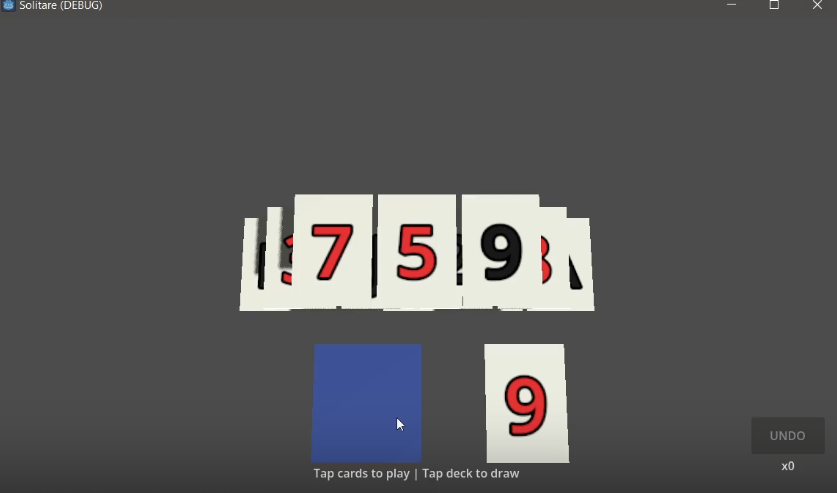
Day 2: The Scene Refactor & The 92% Usage Crisis
- The Orientation Bug: Spent hours debugging why the "Active Card" was spawning standing up while the rest of the deck laid flat. I eventually realized Claude was ignoring the
claude.mdrules and trying to programmatically set colors and meshes at runtime.
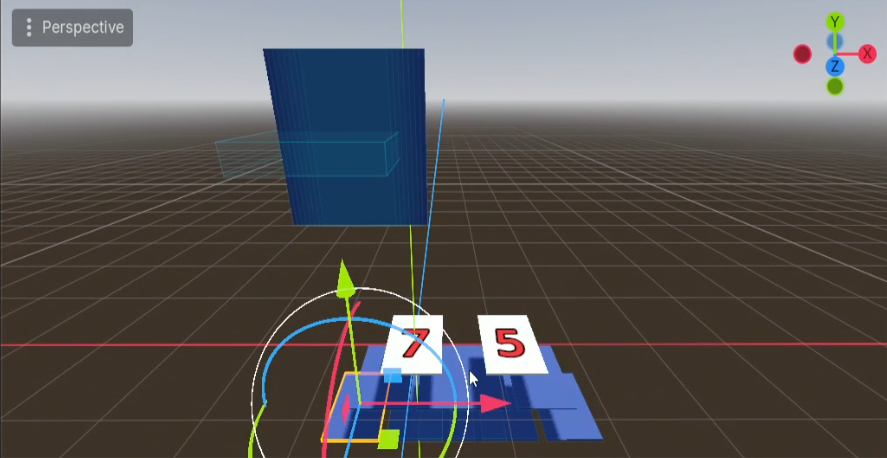
- The Pivot: I forced a massive refactor. We moved to a scene-based architecture where every card type (Regular, Wild, Runner) has its own scene and materials for front/back faces, along with clearly defining the flow of the game (main game scene, which loads level scenes, which contain boards and decks as children).
- The Breakthrough: I struggled with how to actually convey the spatial logic of one card being blocked by four others. After 30 minutes of failing to describe it with words, I discovered a proprietary workflow that allows me to feed the game's internal spatial data directly into Claude’s logic.
- The Results: Instantly, the AI understood the layering. This Visual Bridge changed everything, but it came at a cost, while explaining these things to Claude, and having it come up with a plugin to make everything efficient—I hit 97% of my Claude usage limit just as the logic clicked.
- The Memory Dump: To survive the rate limit, I had Claude offload the entire logic and plan into two strategically designed Markdown files, ensuring I could resume on Day 3 without losing the breakthrough.
Day 3: The Force Multiplier (The Plugin)
- The Tool: Using the Markdown files from the night before, I had Claude build a Custom Godot Editor Plugin.
- The Function: No more manual placement. I can now "paint" card layers into my scenes with a visual ghost-indicator.
- The Grind: We battled more "inferred variable" errors, but the result is a pro-grade tool that turned a 30-minute task into a 30-second one.
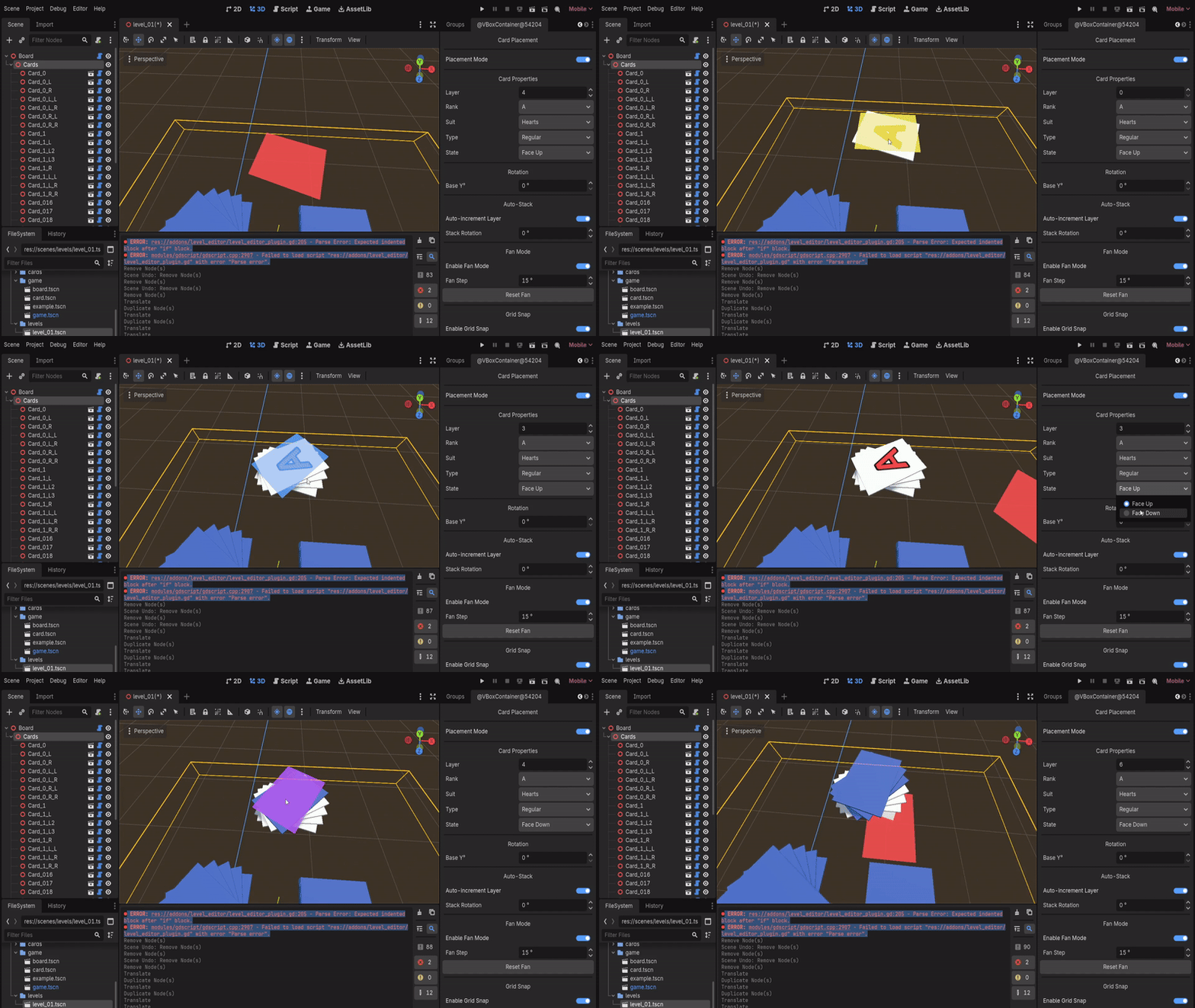
Claude was able to understand exactly how to design this custom tool with just a few prompts—but only because I had spent the previous 48 hours refining the "language" of the project.
Most people treat AI like a search engine; I treat it like a Senior Engineer. By mastering the way I offload project memory and bridge the gap between Godot’s spatial data and Claude’s logic, I’ve eliminated the blank page problem forever.
Keep in mind, that i'm only using the basic $20/mo subscription... So how was I able to get all of this done in just a few sessions without using a max plan?
That's what this entire project is about.
This isn’t just a devlog. It’s a blueprint for a new era of game development. If you’re tired of being a "player" in someone else’s rigged system and want to start being the Architect of your own, I’m showing you exactly how I’m doing it.
"...I’m showing you exactly how I’m doing it. [Join the journey here] and get access to the logic, the prompts, and the 'Visual Bridge' workflow that made this possible."